Tuesday, August 7, 2012

Community When Kids Come Along

I was having lunch the other day with a guy who said, "I just don't feel like there is great community at Origins." I wanted to absorb his critique and let him get it off his chest. So I just listened. I wanted to be objective both about where he and his family are as well as where our faith family, Origins, is at this point in the journey. And it got me thinking about community -- specifically Christian community or followers of Jesus doing life together.

The guy making the assertion came from a church in another state that's full of seminary students, many of whom are newly married and with no money, often no kids, and students who are preparing for their careers rather than actually engaged in their careers. There was, in his opinion, great community there. And I don't disagree. I've experienced great "community" in the past as well that was similar to his experience. 

Typically, what we call community, however, is nothing more than spending a lot of time together while debating the finer points of doctrine, theology, church, or the latest that some cultural or ministry talking-head has thrown out there. Now that's not an accusation against anyone in particular as much as it is an indictment of what life and faith have often been like for me. Its a lot of fun... but at some point life changes.

For example, many in Origins are either newlyweds or brand new parents...or both. Kids coming along is a total game-changer. Community especially changes when kids come along. While we used to go out to eat or have coffee or go do fun stuff at all hours of the day and night, now we are worried about our kids' schedules and whether they are at home on time, sticking with their sleep routine, and getting enough time with mom and dad. And its not that all of that makes community better or worse -- it just makes it different. 

We have to be clear about our intentions. The goal of Christian community should always be to make disciples who make disciples. We can't be disciples or followers of Jesus alone; it must always happen in the context of a community of faith. The goal of community is to start Jesus-movements, Jesus-revolutions. This is the total opposite of community intended simply to make us feel liked or to fill our social calendar. Noah and Owen don't slow down my desire to be a follower of Jesus who wants to make more followers of Jesus, though they have changed our social life and schedule. 

Kids force intentionality. We have to rethink what Christian community looks like once kids and careers come along. So as I have reflected on my friend's critique of Origins' community, I would say that Christian community must morph in the following ways to be authentic, God-honoring, and disciple- and movement-making:

  • Christian community must be deeper not wider. Many think authentic community of faith is marked by "quantity time." This would include seeing each other a lot, doing a lot of things together, and having a lot of discussions. I think when life and kids force families to settle down that authentic community is marked by "quality time." Quality over quality. This means that we are intentional about our time together since we have less time together than before. No shallow chit-chat; let's get right to the heart of the Gospel and how it comes to bear on our lives, marriages, and families
  • Christian community must adjust the "talking points." I think before kids and careers, our conversation often centers around doctrine, church, culture, and others in our group. Out of wisdom or sheer desperation, our conversation must shift, centering on talking life, marriage, parenting, and discipleship. We can't afford to be shallow and talk about others when our world has so much going on in it. Those committed to authentic Christian community when kids come along realize we have to get personal
  • Christian community must be sacrificial. When kids come along, date night isn't forgotten -- its just tougher to make it happen. When there's time and energy, often there aren't funds. So authentic Christian community involves baby-sitter exchanges where I watch your kids then you watch mine so we can take our wives out on dates. That's also a sacrifice of convenience. Finally, its sacrificial with stuff. Our boys Noah and Owen would have almost no clothes without those shared with us by friends; so many of their toys came from others whose kids outgrew them; and even our son's bed was given to us by a young couple in Origins who sacrificed to buy it for us as a gift. When kids come along, Christian community must become more sacrificial
  •  Lastly, Christian community must be gracious and understanding. When I can't hear you say you're "all in" on community, I know you are if I can trust your heart. And sometimes that is enough. I remember the early days of Origins. People stayed over at our apartment late, talking and laughing into the wee hours of the night. That doesn't happen as often anymore. People have kids and need to get them in bed; and our boys sleep about as well as Buddy the Elf and have to be put in bed and have it pretty quiet. But we understand...and I pray our friends on the journey with us understand as well
If you're at that stage of life where kids are now in the family photos rather than those in your community group, who you used to spend so much time with, that's okay. Doesn't mean you are not committed to community. Life changes like the seasons, and we unlearn what we knew and relearn new normals. My kids need to see their mom and dad in real Christian community that is "deeper" (authentic, honest, intentional), personal and relevant, sacrificial, and gracious and understanding. 

We don't bail on Christian community when little ones come along because we worship our kids or their schedules. Nor do we think Christian community stinks because we or those we're in community with have to change and adjust. Life moves forward. We grow and adjust. We choose to practice all those biblical "one another's": love one another, serve one another, share meals with one another, encourage one another, bless one another, pray for one another, challenge one another, and even rebuke one another when necessary. All because of love. All because we need Christian community and know that our kids need to see it as well. So be realistic, stay in the game, and fight for God-honoring, disciple-making Christian community.


Thursday, June 7, 2012

P Diddy, Name-Changing & Faith

So I heard last week that P Diddy's son got a scholarship to go some West Coast school to go play sports. People were all up in arms because P Diddy is worth about a half a billion dollars, and they don't think his kid should be accepting a scholarship. Everyone had an opinion, most were all hot and bothered about the subject. But to me that wasn't the real issue.

The real issue -- to me -- is P Diddy. At least, that's what they were calling him. I remember when he first began to rap, everyone called him Puff Daddy. Anyone else remember that? He had a couple of big songs in the 90s with a guy named Mase, aka Murder Ma$e, aka Mason Betha and with the late Biggie Smalls, aka Notorious B.I.G., aka Christopher Wallace. Confused yet by all the aka's? Get ready.

They called him P Diddy on ESPN radio as they reported the story. But that's not his current name. I believe currently he goes by or is in a group called Diddy-Dirty Money. Before that I believe P Diddy had the aka's of just Diddy, just Puff, and Puff Daddy. Naturally. His fashion line is called Sean John. Turns out his real name is Sean John Combs...or so they say. Now to be honest, I wavered between irritation and amusement as I thought about all the name changes this man has undergone. He's changed his name more than Michael Jackson changed his look or Pink has changed her sound. Silly...

...but then I thought about the Bible. How God changed Abram's name to Abraham and Sarai's name to Sarah as they moved into a new phase of life, a phase where they went from oblivion to deep, personal faith. Jacob's name was changed to Israel after he wrestled with God and lived to tell about it; surely wrestling God leaves a person different -- now Israel had a new name and a limp to prove it. Jesus later changed Simon's name to Peter, the Rock, as he told him Peter would be the one on whom he would build the church.

So name changes don't seem to bother God at all. In fact, seems like God is in the name-changing business just as he's in the life-changing business. Seems like a new name and a new chapter in life often go hand in hand. Leave the old behind. Move forward into a new journey a faith, a new experience, a new relationship with God and other people. One of my mentors once told me it wasn't uncommon for people to change their names several times in a lifetime as they moved into a new stage of the journey.

So here's to you P Diddy...or is it Puff Daddy...or Diddy...or Sean John. To the man whose birth certificate said Sean Combs, here's to you. May your constant name-changing be a reflection of a constant reinvention of yourself, a declaration that who you were yesterday is not who you are today. And may the same be said of us. Thank you for reminding me that I'm not who I was...and who I am today doesn't have to enslave me tomorrow. I can change and be changed. God is writing a story, and tomorrow could be the first page of a new chapter. Heck, today could usher (Usher, aka Terry Raymond IV) in great change. Tomorrow's shift in my life could be so large that a name change is the symbolic (the symbol, aka Prince, aka Prince Rogers Nelson) response. We are each a work in progress.

Signing off, JD...aka John David...aka John -- to some. At least that's what they call me today.

Wednesday, May 9, 2012


Nehemiah: Building Something Together
Nehemiah 13:1-31
Forgetfulness and Intentionality
So today, after 15 messages stretching 13 chapters and 12 years -- as we will see in this final chapter -- we will conclude Nehemiah. As we said at the beginning Nehemiah is about three things. First, its about the sovereignty of God, how God aligns people, places, times, and resources not just so that time moves forward but so that he gains maximum glory in the world and, hopefully, in our lives. Second, in Nehemiah we see what God will do through a surrendered and determined person, one who is all in and willing to do whatever God says. Unlike many of the Bible’s heroes, Nehemiah does nothing miraculous. The rebuilding of the wall, the organizing and mobilizing of people, dealing with conflict, motivating the team, and everything else are a testimony to God’s grace but also to Nehemiah’s steely resolve to get the job done for God’s glory. Finally, the book of Nehemiah is about a people building something together -- a wall, to be sure, but their lives as well. They rebuild a wall, celebrate a job well done, read a lot of Bible together and repent over unbiblical living, relocate into the city, and set all necessary leadership in place so people can live, work, serve, play, and worship in Jerusalem for generations to come. 
And so we went through Nehemiah at this time because I think the messages translate to our situation. God is no less sovereign, or in control, today than he was 2500 years ago when Nehemiah was written. He is still Lord over people, places, times, and resources. God still works greatly through surrendered and determined people. I see the fruit of that in your lives as you work through the process of following Jesus we call discipleship, put sin to death, serve the body of Christ, and invite people to experience for themselves what God has done in your life. For some it happens fast, for others it takes time. But the key question is this: Are you surrendered to God and determined to know him and do his will for your life? Finally, in Greenville with Origins, we are seeing what happens when people work together to build something for God’s glory. We aren’t building a wall, but we are seeking to build a community of faith where people can live, work, serve, play, and worship in our city and know that this is Jesus’ city, existing for his glory and pleasure. 
So today we finish this with just a few simple reminders, anchoring us to those three themes of Nehemiah and giving us forward momentum as we look to the days and months ahead. With that said, let’s pray.
Pray and thank God for how he has spoken through Nehemiah and grown people and our church. Thank him for favor and publicity in our city, saved souls, greater structure, greater sacrifice, more numbers, determination to discipleship, and vision for the future. Thank him for pregnant moms, godly dads, new singles, new couples, the church getting older and younger, stories of life change.   
If you’ve got a Bible today with you -- and let me say that if you don’t, please feel free to take one from the table as you walk out today. Its not stealing. Trust me, there is nothing that thrills my soul more than knowing you are reading the Bible. So if you’ve got a Bible with you, turn to Nehemiah 13: 
(Bit of a funky timeline here, as we will see, but I will explain as we go) On that day they read from the Book of Moses in the hearing of the people. And in it was found written that no Ammonite or Moabite should ever enter the assembly of God, for they did not meet the people of Israel with bread and water, but hired Balaam against them to curse them—yet our God turned the curse into a blessing. As soon as the people heard the law, they separated from Israel all those of foreign descent (Sounds harsh. “You foreign folks can’t be here.” This is less about ethnicity and more about faith and religion. And God says, “Nope. You can’t do life with them.” Sometimes there are just consequences to sin. The Balaam reference is to a story in Numbers 22. My sin rarely just affects me, but it affects tons of people. Choose wisely. Choose obedience).
(So as we get into this we are going to see the people rebelling in some specific ways, evidencing that they’ve forgotten all God did) Now before this, Eliashib the priest, who was appointed over the chambers of the house of our God, and who was related to Tobiah, prepared for Tobiah a large chamber where they had previously put the grain offering, the frankincense, the vessels, and the tithes of grain, wine, and oil, which were given by commandment to the Levites, singers, and gatekeepers, and the contributions for the priests (Offerings out; Tobiah in. As you can guess, this is so wrong on so many levels. First, this guy is Nehemiah’s and God’s enemy. Second, he’s living in the Temple, a place Nehemiah wouldn’t even go, much less live. Third, they couldn’t collect offerings because this clown is living there. Its like, “Sorry guys, you can’t tithe today. We are letting God’s enemies stay in our offering box until they find a new place to live. Just bizarre and dumb that Eliashib let this happen). While this was taking place, I was not in Jerusalem, for in the thirty-second year of Artaxerxes king of Babylon I went to the king (12 years after Nehemiah 1). And after some time I asked leave of the king and came to Jerusalem, and I then discovered the evil that Eliashib had done for Tobiah, preparing for him a chamber in the courts of the house of God. And I was very angry, and I threw all the household furniture of Tobiah out of the chamber. Then I gave orders, and they cleansed the chambers, and I brought back there the vessels of the house of God, with the grain offering and the frankincense (Eliashib forgot but Nehemiah reminds him. He gets angry at what makes God angry -- remember, its never wrong to be angry but it what’s we do in our anger and what’s causing our anger that matters. He makes some laws, cleans God’s house, kicks Tobiah out, and brings the church furniture back in).
10 I also found out that the portions of the Levites had not been given to them, so that the Levites and the singers, who did the work, had fled each to his field. 11 So I confronted the officials and said, “Why is the house of God forsaken?” And I gathered them together and set them in their stations. 12 Then all Judah brought the tithe of the grain, wine, and oil into the storehouses. 13 And I appointed as treasurers over the storehouses Shelemiah the priest, Zadok the scribe, and Pedaiah of the Levites, and as their assistant Hanan the son of Zaccur, son of Mattaniah, for they were considered reliable, and their duty was to distribute to their brothers. 14 Remember me, O my God, concerning this, and do not wipe out my good deeds that I have done for the house of my God and for his service (Second problem: They aren’t paying the ministers. People are living their lives, paying the bills, but aren’t paying their pastors. They forgot they committed to do this but Nehemiah reminds them. He confronts the officials, the neighborhood leaders who are letting this go on. Then he makes them sit there and recollect the money for the offerings, making sure offerings are collected, the pastors eat, and the people learn the grace and discipline of generous giving. Then he puts a system in place to make sure it doesn’t happen again).
15 In those days I saw in Judah people treading winepresses on the Sabbath, and bringing in heaps of grain and loading them on donkeys, and also wine, grapes, figs, and all kinds of loads, which they brought into Jerusalem on the Sabbath day. And I warned them on the day when they sold food. 16 Tyrians also, who lived in the city, brought in fish and all kinds of goods and sold them on the Sabbath to the people of Judah, in Jerusalem itself! 17 Then I confronted the nobles of Judah and said to them, “What is this evil thing that you are doing, profaning the Sabbath day? 18 Did not your fathers act in this way, and did not our God bring all this disaster on us and on this city? Now you are bringing more wrath on Israel by profaning the Sabbath.”  
19 As soon as it began to grow dark at the gates of Jerusalem before the Sabbath, I commanded that the doors should be shut and gave orders that they should not be opened until after the Sabbath. And I stationed some of my servants at the gates, that no load might be brought in on the Sabbath day. 20 Then the merchants and sellers of all kinds of wares lodged outside Jerusalem once or twice. 21 But I warned them and said to them, “Why do you lodge outside the wall? If you do so again, I will lay hands on you.” From that time on they did not come on the Sabbath. 22 Then I commanded the Levites that they should purify themselves and come and guard the gates, to keep the Sabbath day holy. Remember this also in my favor, O my God, and spare me according to the greatness of your steadfast love (I love it; he calls this “disaster.” He never sees any sin as a small sin. The people forget they can’t work on the Sabbath but Nehemiah reminds them. I love what he says in warning them: “I will lay hands on you.” I can just hear the theme song to Shaft in the back as he says this. He warns them, then confronts them, commands them to close the gate, warns people outside the fence who are basically tempting them to sin, and leads the guards to repent of letting this happen and then stop it from happening again. How do you respond when you forget God and get busted?).
23 In those days also I saw the Jews who had married women of Ashdod, Ammon, and Moab. 24 And half of their children spoke the language of Ashdod, and they could not speak the language of Judah, but only the language of each people. 25 And I confronted them and cursed them and beat some of them and pulled out their hair. And I made them take an oath in the name of God, saying, “You shall not give your daughters to their sons, or take their daughters for your sons or for yourselves. 26 Did not Solomon king of Israel sin on account of such women? Among the many nations there was no king like him, and he was beloved by his God, and God made him king over all Israel. Nevertheless, foreign women made even him to sin. 27 Shall we then listen to you and do all this great evil and act treacherously against our God by marrying foreign women?” (So the people forgot they weren’t supposed to have religiously-mixed marriages but Nehemiah reminds them. Why’s it a big deal? In a week Jake and Alison will get married. I remember when they asked me to marry them but weren’t following Jesus. I said, “I can marry you if you’re both Christians or neither Christians, but don’t one of you go giving your life to Jesus without the other one. Then we have a problem.” Based on a passage in 2 Corinthians about being unequally yoked. Same principle here. They forgot but Nehemiah reminds. He confronts them. That apparently wasn’t enough so he then cursed them, beat them, and pulled out their hair. I’ve only seen someone lose their hair in a fight once. Two big girls in high school at lunch; one girl lost her weave in the melee. This wasn’t that pretty. Think they got the picture? Then he forces them to vow to end it. Sounds harsh? Listen, I love it. I’d rather see you in heaven and bald because you lost your hair in a repentance fight than end up in hell with a big afro testifying to sin)
28 And one of the sons of Jehoiada, the son of Eliashib the high priest, was the son-in-law of Sanballat the Horonite. Therefore I chased him from me. 29 Remember them, O my God, because they have desecrated the priesthood and the covenant of the priesthood and the Levites (Again, wrong marriages and this time involving ministry. They forgot but Nehemiah reminds. He chases him from ministry and runs him out of town).
30 Thus I cleansed them from everything foreign, and I established the duties of the priests and Levites, each in his work; 31 and I provided for the wood offering at appointed times, and for the firstfruits.
Remember me, O my God, for good.
So ends the book of Nehemiah. People are forgetting -- over a period of 12 years -- all God had done and delivered them from, and they have jumped back in bed with the same sins that got them exiled and got the wall around Jerusalem torn down. But Nehemiah never forgot. Someone, or many someones -- and it must never just be the pastor -- must never forget the sin we came from and the grace that rescues. Someone must always be appalled, confront, and act. Ought to be some men in our church who act like Nehemiah in this passage. Ought to be some courageous women in Origins who will remind when people forget. God’s glory is at stake. The things they’ve forgotten involve sins of money, sex, and power. These idols and false gods of today are not new; they are the same issues tripping up the people of God in Jerusalem. We are prone to wander, prone to forget all God has done. Someone must remind us of what we’ve been called from and to and challenge us to act. Briefly, here’s why:
We are, by nature, very forgetful
There’s an old hymn that we sing on Sundays sometimes, “Come Thou Fount of Every Blessing.” The writer of it said, “Prone to wander, Lord I feel it; prone to leave the God I love.” Ever felt like that? I feel myself leaving God at times accidentally and on purpose. I really do. And people will say sometimes, “You guys never do anything wrong. I’m such a sinner and you can’t understand me.” Listen, I relate to that line. Prone to wander, to leave the God I love. Why are we like that? I think rebellion makes us forgetful. Sin callouses our hearts. Gives us tough hearts so that the Gospel word doesn’t fall on tender skin. People need God to rip the callouses away. The people had an experience with God a dozen years earlier but their rebellion in the areas of putting money, sex, and power ahead of God had calloused their hearts. But its not always sin. Life just happens. Busyness, loneliness, emotional roller coasters, financial pressures, all of it vies for our attention and makes us forget. Some of you, like me, turn to God when things are bad but maybe not when its good. Even easiness of life can make us forget. So that hymn-writer went on to write, “Here’s my heart, Lord, take and seal it, seal it for thy courts above.” We need God to seal our hearts, to tether us to him.    
Wandering follows forgetting
These folks in this chapter are the same ones who just a few years earlier were living in booths, weeping in worship, committing their families, and making all of these godly decisions. But time and life just happened. It just does. Some of you today maybe have had a week or a month or a season of forgetting God. Here’s the problem with forgetting God. It always leads to wandering. We never forget God and see it lead to good things. Forgetting leads to wandering. Guy is working in a job after a long season of being unemployed. Work is hard and thankless. Next thing you know he’s focused on how hard the work is and has forgotten what it felt like to be unemployed. He starts slacking off, maybe looking for another job, and is ready to move on. Because following leads to wandering. Lady was a drug abuser. Nearly lost her family and her livelihood because she loved the next hit. She got right with Jesus and got clean and free. With time she forgets the Lord and what all her addiction nearly cost her. She starts wandering, playing with fire, and may fall to abuse. Forgetting leads to wandering. 
Let me ask you, Where are you prone to wander? What do you forget and then tend to wander on? I see a couple over and over. You see people who get saved from sin -- and whether its terrible or not that bad by the world’s standards, its always convicting at the moment of salvation -- and walk with Jesus for a season, but then forget what all he saved them from. And they come here and can barely sing, forget their Bibles, just going through the motions; they forgot. What happens next? They wander. First they just miss a week or two. Then its a few weeks. Then they’re gone. Sad. Same thing happens with community. We will have people come into Community Groups and say, “This is the greatest thing...I needed this so much. Spiritually I was alone.” They get comfortable, they forget what it was like not to be in community, and they’re gone -- and they rarely come back. Listen, if I am preaching to you this morning, repent. Come back. Its not too late, but if you keep fooling around, it may be too late. Here’s another. Dude marries way over his head -- because we always do, don’t we ladies -- and marries a gal who is more attractive, funnier, smarter, and has more to offer. And he’s thrilled. Then he forgets all that with work or kids or life and then things grow cold. Just sad. Wandering follows forgetting, and by nature we are forgetters. So what are you, this morning, prone to forget? There you will wander with time.  
Cheap grace excuses or justifies wandering
Published in 1937, Dietrich Bonhoeffer’s The Cost of Discipleship is for me the best book ever written on the Sermon on the Mount. In it he talks about this idea of cheap grace. Let me read an excerpt to you from the book:
Cheap grace is the deadly enemy of our Church. We are fighting today for costly grace.

Cheap grace means grace sold on the market like cheapjack's wares. The sacraments, the forgiveness of sin, and the consolations of religion are thrown away at cut prices. Grace is represented as the Church's inexhaustible treasury, from which she showers blessings with generous hands, without asking questions or fixing limits. Grace without price; grace without cost! The essence of grace, we suppose, is that the account has been paid in advance; and, because it has been paid, everything can be had for nothing. Since the cost was infinite, the possibilities of using and spending it are infinite. What would grace be if it were not cheap?

Cheap grace means grace as a doctrine, a principle, a system...In such a Church the world finds a cheap covering for its sins; no contrition is required, still less any real desire to be delivered from sin. Cheap grace therefore amounts to a denial of the living Word of God, in fact, a denial of the Incarnation of the Word of God...Grace alone does everything, they say, and so everything can remain as it was before...
Cheap grace is not the kind of forgiveness of sin which frees us from the toils of sin. Cheap grace is the grace we bestow on ourselves. Cheap grace is the preaching of forgiveness without requiring repentance, baptism without church discipline, Communion without confession, absolution without personal confession. Cheap grace is grace without discipleship, grace without the cross, grace without Jesus Christ, living and incarnate.
Costly grace is the treasure hidden in the field; for the sake of it a man will gladly go and sell all that he has. It is the pearl of great price to buy which the merchant will sell all his goods. It is the kingly rule of Christ, for whose sake a man will pluck out the eye which causes him to stumble, it is the call of Jesus Christ at which the disciple leaves his nets and follows him.
Costly grace is the gospel which must be sought again and again, the gift which must be asked for, the door at which a man must knock. Such grace is costly because it calls us to follow, and it is grace because it calls us to follow Jesus Christ It is costly because it costs a man his life, and it is grace because it gives a man the only true life. It is costly because it condemns sin, and grace because it justifies the sinner. Above all, it is costly because it cost God the life of his Son: 'Ye were bought at a price', and what has cost God much cannot be cheap for us. Above all, it is grace because God did not reckon his Son too dear a price to pay for our life, but delivered him up for us. Costly grace is the Incarnation of God...Grace is costly because it compels a man to submit to the yoke of Christ and follow him; it is grace because Jesus says: 'My yoke is easy and my burden is light.'
The people of Nehemiah’s day wanted a faith in God that allowed them to live as they would. Sure, they would make sacrifices, but they were empty and devoid of meaning. How do we know? Everything else was bankrupt. They were jumping through hoops because it was what “good people do.” They justified their wandering hearts by saying they were right with God, or in God’s grace. What a bunch of junk! That’s cheap grace. Costly grace...that’s what we’re after. Costly grace says I will deny myself, pick up my cross, and follow him. Though none go with me. Though the cross is heavy and painful. Though it is embarrassing. I will follow. The people in Nehemiah’s day forgot and wandered because they were banking on and embracing cheap grace. Listen, you don’t want a grace that doesn’t cost. 
Intentionality is the opposite of forgetfulness
Want to stop forgetting and wandering? Live intentionally. Own your forgetfulness and make that junk right. They were forgetting in their marriages, finances, and their way they would become more popular or empowered. Where will you fall into forgetfulness? The most dangerous areas are in your love for Jesus and his people. Why? Because when those get out of whack it opens the door for us to wander in other areas as well. These are always primary. That’s why Matthew and Abi Elrod have come up with a plan for their summer and their Community Group. I want him to come share about how they are going to have someone in their group over for dinner every week this summer and if its not your week they want you to spend time eating a meal with someone else in the group this summer. Doing this and having intentional conversations will help prevent forgetfulness, wandering, and cheap grace. 
We are about to go watch a wedding. My prayer is for you married folks that its an intentional reminder of the vows you once took, of the commitment you made, and of the love God allows you to share with your spouse. And if you’re single, I pray its a reminder of God’s desire for marriage and an encouragement as you most likely move closer daily to your wedding day. Tonight we will have baptism at 5:30. I pray you will come because that’s an intentional choice you make to watch the decision someone else has made and a reminder of your decision to follow Jesus. Its their spiritual funeral and resurrection, burying the old person and watching the new one raised to life in Jesus. We need to see that. Intentionality. 
The people -- after all they’d been through -- had forgotten, wandered, and taken God’s grace and goodness for granted and cheapened it. Yet God in his goodness used Nehemiah to remind them. He was intentional about going after people and getting back. He had the heart of Jesus. Today if you’re far from Jesus, he is pursuing you. You may have wandered; he is after you. Today, repent of forgetting, wandering, cheapening the grace that cost him so much to extend to you. Turn to him in faith or return to him in faith. Today is your day.  

Monday, April 9, 2012

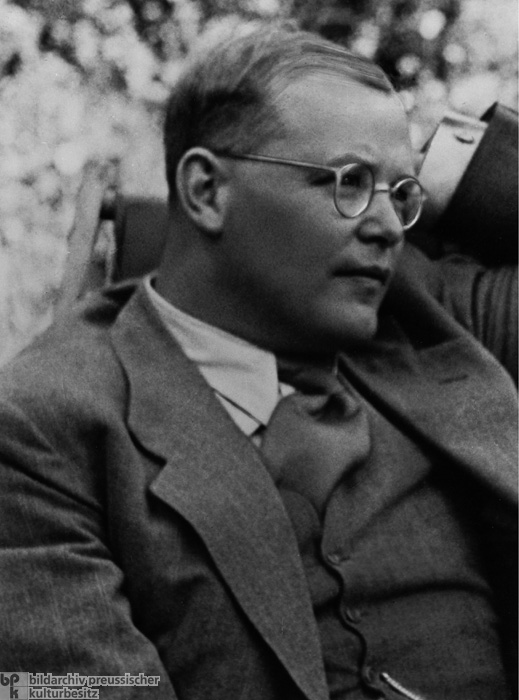
Dietrich Bonhoeffer and Costly Grace

April 9, 1945. As Allied forces were closing in on the Nazis, German soldiers hanged Dietrich Bonhoeffer, German theologian and pastor. Because of his brilliance and influence, and because the Nazis weren't only killing the Jews but also killed many Christians and others who stood against them or for any sense of absolute truth, his friends and family had urged him to escape to America. Of course, they reasoned, he could be of more service to God's kingdom and the German people if he were alive and out of harm's way. He acquiesced and moved to America, only to find that America was the last place on earth he was to be. Almost immediately, he moved back to Germany, all but sealing his fate as he landed in the crosshairs of the Nazis. Shortly thereafter, he was arrested and imprisoned. He maintained his dignity and faith over many months in jail and ministered always to others -- Christian, atheist, and Jew -- in the prisons. He was hanged on April 9, 1945, two weeks before the Allied army overtook the Nazis, the beginning of the end of the war in Europe. 

My favorite Bonhoeffer quote is from The Cost of Discipleship -- the best book ever written, in my opinion, on the Sermon on the Mount. Bonhoeffer said, "When Christ calls a man, he bids him come and die." He backed up his words years later with his martyr's death. But even more, he backed it up every day living as a man who was crucified with Christ, surrendered to Jesus and allowing Jesus to live his life through him. Bonhoeffer saw, and we would all do well to see this as well, that the Christian life is best lived when we see our eyes as Jesus' eyes, our hands as Jesus' hands, our mouth as Jesus' mouth, our feet as Jesus' feet. "When Christ calls a man, he bids him come and die."

He also wrote about the difference between cheap grace and costly grace:

"Cheap grace means grace sold on the market like a cheapjack's wares. The sacraments, the forgiveness of sin, and the consolations of religion are thrown away at cut-rate prices. Grace is represented as the Church's inexhaustible treasury, from which she showers blessings with generous hands, without asking questions or fixing limits. Grace without price; grace without cost! And the essence of grace, we suppose, is that the account has been paid in advance; and, because it has been paid, everything can be had for nothing. Since the cost was infinite, the possibilities of using and spending it are infinite. What would grace be, if it were not cheap?... In such a Church the world finds a cheap covering for its sins; no contrition is required, still less any real desire to be delivered from sin... Cheap grace means the justification of sin without the justification of the sinner.  Grace alone does everything, they say, and so everything can remain as it was before... Cheap grace is the preaching of forgiveness without requiring repentance, (it is) baptism without church discipline, Communion without confession, absolution without personal confession. Cheap grace is grace without discipleship, grace without the cross, grace without Jesus Christ, living and incarnate

"Costly grace is the treasure hidden in the field; for the sake of it a man will gladly go and sell all that he has. It is the pearl of great price to buy which the merchant will sell all his goods. It is the kingly rule of Christ, for whose sake of one will pluck out the eye which causes him to stumble; it is the call of Jesus Christ at which the disciple leaves his nets and follows him. Costly grace is the gospel which must be sought again and again, the gift which must be asked for, the door at which a man must knock. Such grace is costly because it calls us to follow, and it is grace because it calls us to follow Jesus Christ.  It is costly because it costs a man his life, and it is grace because it gives a man the only true life. It is costly because it condemns sin, and grace because it justifies the sinner. Above all, it is costly because it cost God the life of his Son: "Ye were bought at a price," and and what has cost God much cannot be cheap for us. Above all, it is grace because God did not reckon his Son too dear a price to pay for our life, but delivered him up for us... Grace is costly because it compels a man to submit to the yoke of Christ and follow him; it is grace because Jesus says: "My yoke is easy and my burden light."

So here's to Dietrich Bonhoeffer. Read his story in the biography bearing his name by Eric Metaxas. So easy to get tricked into believing that following Jesus is about becoming a better and better moral person and forget that its a great adventure with guaranteed victory. Finally, he once wrote, “Being a Christan is less about cautiously avoiding sin than about courageously and actively doing God's will.” 

Monday, March 26, 2012

Nehemiah 8:1-12 Manuscript

Nehemiah: Building Something Together
Nehemiah 8:1-12
If you’ve got a Bible, we are going to read Nehemiah 8:1-12 and all of you who were here to hear Nehemiah 6:15-7:73 last week and a 9-point sermon about what it means for Origins should breathe a sigh of relief:
1 And all the people (50,000 people mentioned in 7:66-67; basically a sold out pro baseball game’s worth of people) gathered as one man into the square before the Water Gate. And they told Ezra the scribe to bring the Book of the Law of Moses that the Lord had commanded Israel (I love this verse. Its not that Ezra grabbed “the Bible” and started reading it against their will or that the people showed up out of obligation, because it was what good people did. They were there because they wanted to be, and the people told, commanded Ezra to go get the scriptures and read it to them. How would “they” do that? They are literally chanting -- 50,000 of them -- for God’s word to be read to them. The Bible works them into a frenzy. The Law of Moses is Genesis, Exodus, Leviticus, Numbers, Deuteronomy. They get worked up about Levitcus. They are going bananas about a book that is primarily a census list. Pretty cool. The most frenzied large crowd I ever saw was in Boston at a Red Sox game. Its the bottom of the ninth and the Red Sox are winning and they go to bring in their closer, Jonathan Papelbon, to help finish and win the game. And there is a tradition when Papelbon comes in the game to play, “I’m Shipping Up to Boston” by the Dropkick Murphys. Everyone knows Papelbon is coming; and everyone knows the song is coming. And they go crazy. Screaming. Singing. People in the aisles doing the riverdance and Irish jigs. It was just mayhem. Amazing. That’s how the people are acting about the Bible. The Bible’s first five books. Going loco over Leviticus. I heard someone this week use the word “voracious.” Bet I haven’t seen a living human being use that in a sentence 10 times in my life. Means “hooo-ngry.” These people had a voracious hunger for the word of God. Listen: Point #1: Love the stuff that God loves, particularly his Word, the Bible. Read it. Build your life around it. Don’t get discouraged about what you don’t understand. Ask God to help you in faith live out what you do understand. If you don’t have a Bible, take one off the info table on the way out. I want you to. I like the iBibles or whatever these ones are for our iPhones and iPads. But it is only good if you read it, and if you read it more than on Sunday mornings. I am finding that the digital Bibles are easier not to read than a real paper copy of the Bible. Whatever it takes -- digital, paper, scroll or papyrus -- read it. What are you passionate about? Most of it is good. Would you be willing to be passionate about Jesus? Could you sing loud, raise your hands, say Amen, act Cuckoo for Cocoa Puffs about Jesus Christ?)
So Ezra the priest brought the Law before the assembly, both men and women and all who could understand what they heard, on the first day of the seventh month. 
And he read from it facing the square before the Water Gate from early morning until midday (Early morning is about 6 or 7 am. Its the Middle East and its warm. You start early before it gets too hot. 50,000 people jammed in to hear Ezra for about five or six hours, Ezra just reads scripture, the first five books. And the people are engrossed), in the presence of the men and the women and those who could understand. And the ears of all the people were attentive to the Book of the Law (Ever been some where and a “hush fell over the crowd”? Literally, they go from frenzy to hear the words of God to standing there -- 50,000 of them -- listening for 6 hours)
And Ezra the scribe stood on a wooden platform  that they had made for the purpose (he is about to preach to 50,000 people with no mics or amplification. They set him -- and God’s word -- over the people in authority so it will be easier heard but also to show that God is the center of attention on this day). And beside him stood Mattithiah, Shema, Anaiah, Uriah, Hilkiah, and Maaseiah on his right hand, and Pedaiah, Mishael, Malchijah, Hashum, Hashbaddanah, Zechariah, and Meshullam on his left hand (He isn’t alone. These aren’t body guards but other ministers and pastors; Ezra isn’t saying, “Look at me; I’m the rock star.” He is saying, “Hey, God is the center of this show and any of these men could be standing here saying what I am saying. God is the hero.” I pray Origins will always be a church where Jesus is the pastor, the superstar, the One we all want to hear from. Don’t be part of a church where some talking head with more ego than faith has to make all of this more about him and very little about Jesus. Point #2: Help me plant the church that Downtown deserves; a church that isn’t based on a personality but on the person of Jesus. Live your life is such a way that you make Jesus famous.)
And Ezra opened the book in the sight of all the people, for he was above all the people, and as he opened it all the people stood (They stood for hours. Ezra stood. The people stood. God was the hero of the day. When I go to a meeting, if I get there first, and if its with someone I don’t know -- particularly if the person is a lady or is older than me -- I want to stand when he or she walks in the room. Its a courtesy and sign of respect. On this day, everyone stands in honor of the Word of God and its Author. Again, let Jesus be famous. I love Romans 3:4 which says, “Let God be true though every one be a liar.” Let God be honored though we all be humbled. Let God be praised though we become nobodies. Let God be the center of attention though we go unnoticed. The people and the preacher stood so everyone knew who was the guest of honor that day -- the word of God)
And Ezra blessed the Lord, the great God, and all the people answered, “Amen, Amen,” (Many of you grew up in church; for those who didn’t, Amen just means, “Lord, let it be.” So if you hear truth on Sunday -- or even during the week -- say Amen. If you pray, end with Amen. If you think that’s an ancient word, affirm it however you want. But Amen isn’t weird. Its confirmation. I can still see my Grandpa sitting in worship with his arm on the side of the pew, legs crossed, encouraging the pastor with his Amens. Ever been in an African-American church? Man I love it. I love all the Amens, Come ons, Preach it preacha’, all of that. Point #3: When you hear truth, affirm it. We live in a culture where we affirm a bunch of godless junk. Its amazing on Twitter the crap that people retweet and Amen by doing so. Amen the things of God, vocally and with your life. Peer pressure is an amazing thing. When you hear or see people doing godly stuff, affirm them. When you see people who claim to follow Jesus living like pagans, tell them they are morons and live a life that demands an Amen) lifting up their hands (The people lift their hands in praise. God gave you those hands to do tons with. What a person does with his or her hands says a lot about them. Point #4: What a testimony to lift your hands back to Jesus in victory, affirmation, surrender. Paul says in 1 Timothy 2:8, “I desire then that in every place the men should pray, lifting holy hands without anger or quarreling. Saying Amen or lifting your hands are totally acceptable and encouraged here at Origins, not for show but between you and God. It says, “I am on board with Jesus and affirm him”). And they bowed their heads and worshiped the Lord with their faces to the ground (50,000 people. The entire stadium worth of people who were standing for 5 or 6 hours now all bow down in reverence, worship, and brokenness. That’s worship. That’s humility. That’s saying that God is the guest of honor and -- after hearing his word -- that they rightly understood who they were and who he is)
Also Jeshua, Bani, Sherebiah, Jamin, Akkub, Shabbethai, Hodiah, Maaseiah, Kelita, Azariah, Jozabad, Hanan, Pelaiah, the Levites, helped the people to understand the Law, while the people remained in their places (These aren’t the pastors; they were there earlier standing by Ezra. These are the Community Group leaders. They are breaking the group of 50,000 into smaller groups and asking the people if they understood what they heard. This is “Unpack that” and “What does that look like?” Its small groups talking about the Bible. Its like our Origins Community Groups. Point #5: Listen, coming on Sunday is great and fine but you were meant to connect with Jesus first and with people second. This faith is never meant to be lived alone. Lone Ranger followers of Jesus always get picked off first. And shame on you if you’re giving trite simple answers in CG. These guys aren’t just talking this out in monologue; this is the people wrestling through this with a facilitator. If this isn’t happening in your CG, you need to be trying to make it happen. Answer the questions. If its your first time going, you get a pass on Week 1. After that, you need to be talking from your heart and life and not just some cliche junk you heard me or any other preacher spout off one time. If you have to do your questions quick some weeks or not at all and get guys on one side of the house and gals on the other so that real community happens and we are figuring out together -- with Bible in hand -- how to live for Jesus, then you fight for that and get it done)
They read from the book, from the Law of God, clearly, and they gave the sense, so that the people understood the reading (Two things here. First: It doesn’t matter what I say or Matthew or Joel or whoever stands up here talking say if you don’t understand what that means for your life. Truth is truth whether you and I believe it or not; but truth always needs a body, a place where it can be lived out. These people wanted to make sure the people got it and were in a position to live out what they had heard. Second: Understand how this works. Ezra and the pastors did what some have called Air War. These men, these leaders did what some have called Ground War. Both have to be done. The equivalent for Origins of the broad, air war -- stuff for the masses -- would include the website and preaching on Sundays. The ground war equivalent for Origins would be more focused, personal, intentional and would include Community Groups, most of the Love the City stuff that will happen this week, the one-on-one meetings and so on. Point #6: Effective churches must do both air and ground war, but Origins must be most excellent at ground war. If you don’t love people, plug into a Community Group and be there, invite people, serve people -- then it isn’t going to happen. The ground war is dependent on you. I firmly believe that people can be saved on Easter Sunday here at Spill the Beans. I firmly believe that people will see, hear, and touch the Gospel over the next 14 days because they are served and loved. I firmly believe that spiritually dead people can and will be made alive in Christ. But I do not think it will happen because of one person alone or because of our cool location or because the Greenville News wrote a couple of stories about our church. It will happen because you serve -- you come up with an idea and make it happen -- or you walk across the street and invite, or you speak up to the person you know you are supposed to invite.).
And Nehemiah, who was the governor, and Ezra the priest and scribe, and the Levites who taught the people said to all the people (All of them had jobs and knew their roles. Nehemiah isn’t trying to be a busybody do it all; he defers to Ezra. Everyone had a role but they were all communicating the same message. This is crucial. We all in Origins have different roles in this church and may come from different places and do different things, but if we can all agree that God has called us to love him, each other, and our city -- our Downtown -- then he can do great things), “This day is holy to the Lord your God; do not mourn or weep.” For all the people wept as they heard the words of the Law. 
10 Then he said to them, “Go your way. Eat the fat and drink sweet wine and send portions to anyone who has nothing ready, for this day is holy to our Lord. And do not be grieved, for the joy of the Lord is your strength.” (The people were broken. They had been used for something great and now they see that it wasn’t just for their safety or comfort but for the glory of God -- as they hear in the word and unpack in small groups -- that compelled them to do this. And they weep. But Nehemiah and Ezra and the Community Group leaders, the Levites, say, “Don’t cry; celebrate” They aren’t saying the people should never cry or mourn or weep; they’re just saying today isn’t the day for that -- today is the day for a barbecue because the people understood how evil they were and how good God is and when our evil and his good collide, love wins and that demands a celebration) 
11 So the Levites calmed all the people, saying, “Be quiet, for this day is holy; do not be grieved.” 
12 And all the people went their way to eat and drink and to send portions and to make great rejoicing, because they had understood the words that were declared to them (In other words, they realized that this book wasn’t about trying to figure out what to do to please God but about seeing what God has done because he loves them. The Bible should afflict the comfortable and then comfort the afflicted. We ought to lay our souls bare before the Lord and his Word and allow his Holy Spirit to speak to us and mold us as he will. And if we really let that happen, it will cause some brokenness every time. But God -- thank God -- doesn’t leave us that way. After he afflicts us with the conviction of truth, he comforts us. Because Jesus took the punishment, we don’t have to run around miserable all the time. I am no longer a sinner. I am now a saint. That should give me joy. I have a hope and a future. I am part of God’s family. God doesn’t shout at me how to please him; he loves me, pursues me, purchased me by laying down his life for me. Its so beautiful and relational. But then we look at the Bible and go from relational to rules. No. God forbid! This isn’t an instruction manual for life. It is first a love letter from a Lover who is obsessed with his beloved and would go to hell and back to rescue and woo her. This isn’t a book screaming, “Build these 10 habits and it’ll all be okay.” Its a warrior screaming, “Freedom!” and then guaranteeing that freedom by laying down his life. Don’t be duped into thinking this book is meant to make wild men tame; it is only and always first to make dead people alive. And for the first time in their lifetimes, the people see that. And what at first is tears and the sound of sobbing becomes laughter and the sound of freedom’s celebration. For us, we can have a similar celebration. First, we mourn because in our sin Jesus died for us. While we were enemies of God, the Son of God gave his life for us. Yet we do not mourn forever and talk forever about how we are epic failures and will never change. No, we rejoice because Jesus has made all things new).    
So what does this mean for our lives? First, love the Bible and as you read it let the Holy Spirit of Jesus work in you and work on you to work through you. The people loved the Bible. Do you? Second, realize that -- especially if you will think as a church plant team -- the guys on the ground, helping everyone understand the truths they heard, were as critical or more critical than the guy behind the pulpit. This is your church; fight for it. I recently heard someone unfairly criticize our church to another person in our church. Should have told them to grow up, step up, or shut up. With the good and the bad, love your church. Finally, understand that the Good News is only good as long as we first accept and are moved by how bad the Bad News is. You can’t have the joy of the Lord without first being broken by the despair of our sin. You can’t get the empty tomb Resurrection Sunday victory without the bloody cross Good Friday murder of the Son of God. We did that. Let brokenness flow from apathy, then peace and joy and forgiveness flow from brokenness. 

Monday, March 19, 2012

For the Sake of the City: Nehemiah 6:15-7:73

Nehemiah: Building Something Together
Nehemiah 6:15-7:73
Throwing Down the Gauntlet...and Stepping Up in Love
So I’m going to get right to it this morning. Over the past few weeks, we have talked about Nehemiah, an Old Testament hero not because of the miracles he did or because of the amazing teaching that he had but because he was a regular person just like you and I who decided he was going to put God first. And that decision led him down a path from comfort to discomfort. He felt called to rebuild the wall around Jerusalem so that people could once again live, work, serve, play, and worship God in the city. It wasn’t easy. For almost 150 years, others had taken on this monster task and failed or abandoned the job -- yet Nehemiah was resolute. Critics tried to stop him and even kill him; his workers and countrymen tried to tap out; even the “godly” people of his country tried to deceive him to get him to give up -- yet Nehemiah was determined. Because when God calls us to do something, we have to make a choice: We either obey or disobey. That’s it. Only two options. 
God has called Origins to something. He called us not just to start a church but to be salt and light in decay and darkness. He called us to partner with him to change statistics of lostness, indifference to church and the things of God, and a general spirit of apathy in our city. At times I perhaps have held Origins perhaps in gridlock by not asking you to do more than I have. I haven’t wanted to burden you or didn’t want to ask too much of you. And I have crippled you. And for that I am sorry. But today I am asking you, “Rise up.” I am going to ask you today that if this is your church, maybe for the first time in your life, that you pursue a significant level of buy-in with serving here on Sundays and during the week, engaging the community as well as your neighbors and those who God has strategically placed in your path, in giving financially, and in stepping up and being men and women of God. 
I’m not naive. I know some of you may be offended and may even bail. That’s okay. At the end of today, one of two things has to happen for God to get maximum glory in your life, in Origins, and in Downtown. You are going to have a chance at the end to sign up for some stuff, to share ideas, to make some commitments today. If you write nothing down, if you refuse to serve and labor, I will take that as your confession that this is not your church. No more free rides. I will encourage you to find a place where you will serve, invest, invite, give, and grow. But almost all of you -- I hope every one of you because I love you and want to labor with you and watch you grow -- are going to make some commitments and are going to engage as owners in Origins, and I promise your lives will never be the same. 
So before we get started, let’s pray.
If you’ve got a Bible, let’s read starting in Nehemiah 6:15 and go forward:
15 So the wall was finished on the twenty-fifth day of the month Elul, in fifty-two days (In the interest of time, I am just going to give the sermon notes as we talk through the passage today. They finished the wall. He doesn’t describe at length. All we know is that what no one else in almost 150 years could do, Nehemiah did in 52 days, less than 8 weeks. Why was he so able when everyone else failed? He had a good plan, assembled a great team, would not be distracted or deterred, and stayed single-mindedly determined as he worked really hard). 16 And when all our enemies heard of it, all the nations around us were afraid and fell greatly in their own esteem, for they perceived that this work had been accomplished with the help of our God (The wall wasn’t a miracle, not something that couldn’t be done. It just became obvious that there was something to this. Some stuff can only get done if God shows up. I can testify to this. Natalie and I moved to Greenville and knew not one soul. Origins -- for me -- is something only God could do. You collectively are the seal of his presence. You are proof that God was in this. To this point, this has all been done by God using a great plan, a great team, a single-minded focus, a lot of hard work). 17 Moreover, in those days the nobles of Judah sent many letters to Tobiah, and Tobiah's letters came to them. 18 For many in Judah were bound by oath to him, because he was the son-in-law of Shecaniah the son of Arah: and his son Jehohanan had taken the daughter of Meshullam the son of Berechiah as his wife. 19 Also they spoke of his good deeds in my presence and reported my words to him. And Tobiah sent letters to make me afraid (Unlike Nehemiah, Tobiah is Jewish enough to be connected, and people feel bound to keep him in the loop. He is Jewish when its advantageous and does his own thing when its advantageous. The rebuilding of the wall is not to his advantage, so he is mad. A lot of so-called “Christians” are like this. They love Jesus if it will get them out of hell, give them social standing, and make them feel good about themselves. The moment someone asks them to give, show up, take a stand, put away a habit, they say they’re “not being fed” and bail. Thankfully, I never have believed and do not today believe most of you feel that way. But today we will formalize some of that commitment. There’s no use for Tobiah’s if people want to do a great work of God for God. If we want God to use our church, your life, your marriage, our businesses, our whatever -- we had better be all in and ready to pay the price. Can’t charge the gates of hell with someone who isn’t all in. Tobiah wasn’t. Nehemiah was).
Now when the wall had been built and I had set up the doors, and the gatekeepers, the singers, and the Levites had been appointed (People got involved in the ministry; Nehemiah asked for volunteers and people stepped up. A couple of things. Those who could sing didn’t need to be keeping the gates, and the gatekeepers didn’t need to be singing. My last pastor insulted me once and said, “I’m glad to see you’re as bad a singer as I am.” I bowed up before I realized he was right. God didn’t call me to sing; he called me to love and shepherd you guys, to teach the Bible, and to spend time with people far from Jesus. God has shaped you uniquely and today at the end you can sign up to do something. Everyone needs to be doing something because everyone is gifted to serve somehow. Understand this too. The gatekeepers, hopefully, grew up to do newer and bigger things. Some of you are going to serve God one way now but will one day take on more and more -- that’s part of growing up and becoming a disciple), I gave my brother Hanani and Hananiah the governor of the castle charge over Jerusalem, for he was a more faithful and God-fearing man than many. And I said to them, “Let not the gates of Jerusalem be opened until the sun is hot. And while they are still standing guard, let them shut and bar the doors. Appoint guards from among the inhabitants of Jerusalem, some at their guard posts and some in front of their own homes.” The city was wide and large, but the people within it were few, and no houses had been rebuilt (So the city has all the structures in place but now they have to get the people in there. This is about where we are as Origins. After we finish reading this passage, I am going to share several seismic shifts in our structure going forward. Our church is “wider and larger” than it was a year ago so now we are in a better place to share Jesus with more people and invite people to come worship him with us).
Then my God put it into my heart to assemble the nobles and the officials and the people to be enrolled by genealogy. And I found the book of the genealogy of those who came up at the first, and I found written in it (I’m going to skip several verses but the gist of verses 6 through 65 is that Nehemiah lists by profession the people who went into exile and are now back near Jerusalem. Verse 66)
66 The whole assembly together was 42,360, 67 besides their male and female servants, of whom there were 7,337. And they had 245 singers, male and female. 68 Their horses were 736, their mules 245, 69 their camels 435, and their donkeys 6,720 (They counted everybody. They knew who was there; every face had a name to Nehemiah, and every name had a story. Same with you guys. I love you all so much and am so proud to be pastor of this church. I don’t look out and see Origins but I see Chase, Chad, Kyle, Taylor, Abram, Joel, Abi, Jessie, Samantha, Alison, Natalie. And I don’t just see Downtown Greenville, and I hope you don’t either, but I see Daryl, Zack, Jennifer, Lauren, Chuck, Josh, Maddie, Ryan, Susanne, Ric, and so many others. We do this so they can make their way to Jesus. We count people because people count. You matter).
70 Now some of the heads of fathers' houses gave to the work (About to take a great offering to give to a great work of God). The governor gave to the treasury 1,000 darics of gold, 50 basins, 30 priests' garments and 500 minas of silver (That’s a lot. I’m no archaeologist or accountant, but that’s a boatload of money. The guy with loads of resources chose to be generous and sacrificial for the glory of God). 71 And some of the heads of fathers' houses gave into the treasury of the work 20,000 darics of gold and 2,200 minas of silver (That also is a lot. More people being sacrificial). 72 And what the rest of the people gave was 20,000 darics of gold, 2,000 minas of silver, and 67 priests' garments (This isn’t rich people giving; this is everyone. They couldn’t give as much as the governor individually, but they gave -- all of them -- to the work, and together they did more than even the wealthiest person. The first church I served in had a man who literally gave over 50% of the church’s tithes and offerings. He made a fortune in Coca Cola stock decades before. He gave and everyone knew it. So when there was a need, everyone looked to him and he gave of his wealth and love for Jesus. Thankfully, we don’t at Origins have any one person or family like that. We make it because so many of you give not out of your wealth but in faith and in love for Jesus).
73 So the priests, the Levites, the gatekeepers, the singers, some of the people, the temple servants, and all Israel, lived in their towns. And when the seventh month had come, the people of Israel were in their towns (They did the job, they gave of their money, and they were able to go home -- the work of the wall is done. In the weeks ahead, Nehemiah’s work will shift from God using him to work on a wall to God using him to work with people).    
So what does all of this mean for us? Here can be your points from this passage: (1) Everyone worked and they built the wall; there has to be a significant level of buy-in among God’s people to do a God-sized work. You need to be at work for God’s glory -- not to earn his love but because we have received his love. (2) Everyone served; the church is a body (not a building or an organization) and every part of the body has to serve and work with the body for it to function properly. You need to be serving. (3) Everyone gave; we can accomplish more together for God’s glory than any one of us can individually. You need to be giving. 
I want to share with you today several things that are about to go down and how this story in Jerusalem 2500 years ago parallels our story as a church. Nehemiah started with very few and a disorganized people, gathered and used a handful of folks to rebuild the wall, and now is about to open the doors of the city for the masses to come in to live, work, and worship God. When we moved here we had a few disorganized people with a vision. You have stepped up and we are rebuilding the wall. Today is the day we hammer out final details and commit to open the doors and let the masses come hear about Jesus at Origins. At the end you will have a chance to commit and sign up for some stuff. Let’s start with Loving the City, then Love One Another, then Love God. I know you will have questions. Here we go:
Love the City Week. The week before Easter, starting on Friday, March 30, we are going to call Love the City Week (#LovetheCity). Over the course of that week, I want us to make as many Gospel contacts as possible. By “Gospel contacts” I mean serving someone or doing something for someone because you love Jesus and in order to tell them what God has done in your life, invite them to worship with us on April 8, or leave them a business card inviting them to come April 8. This can be done as individuals, families, a few friends, or Community Groups. I know some Community Groups have brainstormed ways to serve together; this is your time. I am not telling you how. I want every Community Group to serve together in at least one way. And I want us to make anywhere from 200 to 500 Gospel contacts with people, inviting at least 200 to worship with us that day. Serve Pendleton Place, local artists, your neighbors, local businesses, or anyone of several other places. Just serve and invite. And let me also say that I don’t think we can all serve or invite just once and make it happen. Its going to take serving and inviting together and individually. Biggest thing we have ever undertaken as a church. For three years we have served and served and never invited. Now, for the first time, we are going to risk and serve and invite. So at the end today, if you will serve, write your name down. And if you know how you will serve, write that as well. Now, briefly, let me speak the truth in love: I know some of you are going to want to critique what others are doing; that’s not what this is about. Just serve.  
Community Groups. As I shared with everyone last Sunday, we are temporarily shutting down the Tuesday Group. In a few weeks, we will relaunch with Evan and Anna Johnson as leaders of that group. They will begin the week of April 15. For the two weeks before that, all Community Groups will not meet. The week before Easter, I want groups to serve. I want to free you to serve at least one night of the week and preferably more. So no Community Groups the week of April 1. If you need to take the week before that to plan for serving together, I am good with that and completely affirm it. The week after Easter there will be no Community Groups either. I want us to celebrate and prepare for what God has done and is about to do. The week after, groups will start back and go until Memorial Day. As we relaunch Community Groups, I want you to be in one. Origins was never created to be a Sunday church. In fact, we never wanted to have Sunday “church” but wanted instead to create a place where the different Community Groups could gather together to celebrate and encourage each other. That’s why this isn’t called worship or church but Gathering. So I need you in a group, and you need to be in a group. At the end, you will have a chance to sign up for a group that I want you to commit to attend at least 5 out of the 6 weeks from Easter to Memorial Day. A 6-week commitment. So you can sign up to be in a Community Group by signing your name to the day and group that you plan to be part of. If you know nothing of any of the groups and have no preference, just put your name by any of the days and we will get you put in a group in the days ahead.  
Nursery Multiplying. If you haven’t noticed, Origins has become a baby factory. This means several things. First, it means that your marriages must be good or your birth control must be bad -- either way, I am excited for you all. Second, it means our church is expanding via the children’s area. For a while, this was no issue. Now it is. 5 year-olds and 5 week-olds don’t need to be together. So Brittney, Abi, and Natalie are recommending that we divide the children starting Sunday, April 1. To make that happen, we will have a Childcare Training Time next Sunday morning, the 25th, after the Gathering. They want babies to do what babies do: sleep, cry, poop, pee, be changed, listen to soft music, and be read stories about Jesus every Sunday. They want older children to hear a Bible story, do a craft, sing songs about Jesus (led by one of you -- our new Children’s Worship Leader who God is burdening and you will step up and serve), and grow spiritually to a day where they are ready to accept Jesus. They have an idea about “staffing” the nursery, but we need more volunteers as more kids come. No, it doesn’t have to be all women. Yes, men can serve. Yes, I firmly believe that if you are a parent, it is your privilege and obligation to be on a rotation to help with kids. I need your help. If many of you will sign up, no one person will have to do it all the time. Which leads to my next challenge...
More People Serving. Every Sunday -- every Sunday -- several of you do an amazing job volunteering, serving Jesus. For a year now, Kyle Laue has overseen tear down after we finish. For over a year, Mike Anscomb has helped set up almost every Sunday and -- in recent days -- has been helped by Jake, Matthew, Namon, and Chad. To make Gatherings happen takes people. We need more to help with that and to learn to do it; we need more to learn to run ProPresenter; we need more Greeters and Hospitality folks; we need more people to tear down -- though we don’t need everyone thinking, “I’ll do tear down so I don’t have to get there early.” I need you to step up. I’ve had a realization: We can not continue to operate like a church and do what God wants us to do in Downtown. We have to shift to thinking and acting as a church plant with you as a church plant team. So today at the end, I want you to sign up to serve God’s people on Sundays as an act of love for Jesus himself, and you can sign up for set-up, children (and we will run a background check on you), greeting and hospitality, technology, tear-down, and -- if Abram is willing -- coffee...because my wife can’t do it anymore with two babies. How would God have you serve him here?
Easter Sunday Location. Now about Easter. The most people we have ever had on a Sunday is 60. I am praying for 100 on Easter. At least 100. If you all come along with the Origins “regulars,” that will be 60. If each of you invites one person and half of them come, that’s 90. And I believe that if we give out 200 to 500 cards, one in every 10 of those people will come. We can’t meet here like this with 100 people. I tried my best to relocate us that day but either a door was shut or the open door would be foolish stewardship of resources. So on Easter Sunday, we will have two Gatherings. We will gather for worship at 9:30 and 11:00. Jason Enlow is going to paint, Taylor is singing, we are shooting a video about hope and victory in Christ, and I am sharing the story of Jesus’ Resurrection and the difference it makes. Going to be the greatest day of worship we’ve had. Our hearts are going to be set on fire, and people we know and new friends are going to come to accept Jesus that day. That’s 21 days away. What if -- for 21 days -- we all served, prayed, invited, believed God to do something huge? How incredible could that be? 
Easter Sunday Offering. At the end of that Sunday, we are taking an offering. Biggest one day offering we have ever received is about $3,500. I can promise you no one family can give that amount. So here’s what I am asking you to do in faith and obedience. I want you -- on that day -- to give at least a 10% offering to God. Write out what you make in a month or a week or whatever and move the decimal point one space to the left and give that. So if you make $3,000 a month, I want you to give $300 that day. If you make $600 a week, I want you to give $60. I want you to figure out what makes you comfortable and give a little more. Some of you have come a long time -- a long time -- and have never given to Origins. That Sunday is going to be your day. If you have kids, I want you to give the offering with your kids or let them give too. Why? Because they need to see Dad and Mom confess with their actions that God provides health, a job, the ability to earn money and live and that Dad and Mom trust Jesus. Some of you may say, “I get paid first of the month and give first of the month.” If that’s your conviction, do that...if you want to hold it for April 8, I am good with that. When we wrote up the budget we had a real budget and a dream budget. We need to do some stuff in the dream budget but need more to do it. I believe many of you are going to give that Sunday and then keep giving afterwards. God is going to use Easter’s offering and what you will give in the weeks following Easter to do great stuff. And like the regular folk giving in Nehemiah 7, I need you to give -- especially on that day.
Two Gatherings Starting Easter. This is the big change. Starting April 8, we are going to two worship Gatherings at Spill the Beans. The Relocation Team, after meeting, praying, exploring options, has decided that this is where we need to stay for multiple reasons. I’ve talked with Taylor, Abi, Brittney, and Abram, and we are all on board and ready to do the work required. The main reason is that we believe God wants us to love, serve, and bless our city and start churches, and we can’t do that if we are tying up a ton of money in renting space. Objections. “We will be two churches.” No we won’t. It’ll be the same worship service just at 2 different times. And in reality I hope we operate as 4 churches...each Community Group as a little church. “I won’t get to see my friends in the other group.” I am asking two Community Group leaders to come to the early and two to come to the late, and if you want to be with those in your group, come to that one. If not, come make some new friends. The times will be 9:30 and 11:00. You will have from 10:30 to 11:00 to converse and “do life” even if you’re in separate services. “It’ll feel small.” I remember a Sunday where there were 18 and I thought revival was happening. I am okay with dropping back, pruning, to experience more growth. “I don’t think we need to do it.” Yes we do. There is such a thing as the 80% rule. At 80% capacity people stop inviting friends because it feels full. We are at 80%. This room can seat about 75 people uncomfortably, 60 comfortably. We have had as many as 48 adults on a Sunday in here. 80%. I don’t believe that God wants us to settle for being a church of 50 while people around us in our Downtown die apart from Jesus. So today at the end, you will have a chance to sign up for the early or the late Gathering so we can see how it will come out. You aren’t bound to go to that one every Sunday or even ever, but it will help me see what we are looking at each week. Meeting here will save on rent and allow us to invest God’s resources that you give in hiring staff, saving to plant churches, investing in God’s work that is already happening, and better loving the city. 
New Worship Leader. Sadly, Sunday May 6 will be Taylor’s last Sunday. He has done a great job for 10 months as worship leader but is moving to Charleston with the Tarlatans to pursue their music. So we are looking for a new person. Pray for this new person -- and we have a “job description” and are putting some feelers out there -- that we will find each other. We are asking for interested candidates with musical ability, love for Jesus, love for Origins, and vision for our city to come serve; if that’s you or if you know of someone, pass their contact info along to me. But we are in transition. And I believe God is going to provide.  
New Elder Candidate. Finally, after a long season of prayer and conversing, Matthew and Abi Elrod committed this week for Matthew to be an elder candidate in Origins. So he, like Jon Poole, is going through the process to become an elder in Origins. In the interest of time, I am not going to share much more than that today, but I do want to pray for Matthew and Abi and ask that you do the same today and in the days to come, and then I want to allow you time to sign up to serve, be in a Community Group, and volunteer.
Our best days are ahead. The day they finished the wall and took the offering wasn’t the culmination for Jerusalem and Nehemiah. It was a celebration point, opening the door to more life change and more souls saved. The offering and the commitments paved the way for more. I am excited about Love the City week and what is going to come of it. I am excited about Easter. I am excited about April 15, the week after Easter. And I am excited to see how God is going to work in you and through you as you are obedient to him. This is not an ending but a beginning.